Collagen has become one of the most talked-about supplements in health and beauty circles. From improving skin elasticity to supporting joint health, collagen supplements promise a wide range of benefits. But the real question is: Are collagen supplements actually effective? This guide breaks down everything you need to know, including scientific research, expert opinions, and practical tips for use.
What Is Collagen?
Collagen is a structural protein that makes up roughly 30% of the body’s protein. It forms the foundation of connective tissues, providing strength, elasticity, and structure to the skin, bones, tendons, ligaments, and cartilage.
Key Functions of Collagen
- Maintains skin elasticity and firmness
- Supports joint and bone strength
- Strengthens hair and nails
- Supports muscle recovery and connective tissue
Types of Collagen
- Type I – Skin, bones, tendons, ligaments
- Type II – Cartilage and joint health
- Type III – Skin, blood vessels, muscles
- Type V & X – Hair, nails, and bone support
Why People Take Collagen Supplements
Collagen production naturally declines with age:
- After age 25, collagen production decreases by 1–2% per year
- Menopause and hormonal changes accelerate collagen loss in women
- Sun exposure, smoking, and poor diet can degrade collagen faster
Supplementing collagen is believed to replenish amino acids, supporting the body’s ability to produce collagen naturally.
Are Collagen Supplements Effective?
1. Skin Health and Anti-Aging
- Collagen supplements are often used for skin elasticity, hydration, and wrinkle reduction
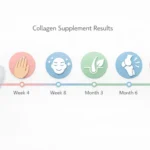
- Clinical studies show hydrolyzed collagen peptides improve skin moisture, elasticity, and reduce wrinkle depth within 4–12 weeks of consistent use
- Doctor insight: Collagen works best when paired with vitamin C, which is essential for collagen synthesis
Benefits for Skin:
- Increases skin hydration and firmness
- Reduces fine lines and wrinkles
- Supports skin regeneration
2. Joint Health
- Collagen supplementation may reduce joint pain and improve mobility, especially in people with osteoarthritis or active lifestyles
- Type II collagen is particularly effective for supporting cartilage health
- Studies show supplementation for 3–6 months can significantly reduce joint stiffness and discomfort
Benefits for Joints:
- Supports cartilage and connective tissue
- Reduces joint pain and inflammation
- Improves flexibility and mobility
3. Bone Health
- Collagen provides structural support for bones
- Some studies indicate that taking collagen supplements increases bone mineral density, reducing the risk of fractures, especially in postmenopausal women
Benefits for Bones:
- Maintains bone strength
- Reduces osteoporosis risk
- Supports long-term skeletal health
4. Hair and Nail Health
- Collagen supplies amino acids needed for keratin production, strengthening hair and nails
- Clinical evidence shows improved nail growth, reduced brittleness, and hair strength with daily collagen supplementation
Benefits for Hair and Nails:
- Supports hair growth and thickness
- Reduces nail breakage
- Promotes overall hair and nail strength
5. Muscle Mass and Recovery
- Collagen contains amino acids like glycine and proline, which aid in muscle recovery and growth
- Supplementation may help maintain lean muscle mass in older adults or those recovering from injury
Benefits for Muscles:
- Enhances muscle tone
- Supports post-workout recovery
- Reduces risk of muscle loss with age
Doctor Recommendations on Collagen Effectiveness
Evidence-Based Guidance
- Hydrolyzed collagen peptides are better absorbed than whole collagen
- Daily doses of 5–15 grams are recommended for joint, skin, or hair benefits
- Combining collagen with Vitamin C and a protein-rich diet increases effectiveness
- Benefits may take 4–12 weeks to appear for skin and hair, and 3–6 months for joints and bones
Key Points:
- Choose hydrolyzed collagen for absorption
- Use consistent daily doses
- Pair with Vitamin C and protein-rich foods
- Set realistic expectations for results
Types of Collagen Supplements
| Collagen Type | Source | Best For | Notes |
|---|---|---|---|
| Type I | Bovine, Marine | Skin, hair, nails, bones | Most abundant; widely studied |
| Type II | Chicken, Bovine | Joints, cartilage | Supports joint cartilage |
| Type III | Bovine, Marine | Skin, blood vessels | Works with Type I for skin elasticity |
| Marine Collagen | Fish | Skin, hair | High absorption; preferred for beauty benefits |
| Hydrolyzed Collagen | Bovine, Marine | All purposes | Broken down for easy absorption |
How to Take Collagen Supplements Effectively
- Dosage: 5–15 grams per day depending on the goal
- Form: Powders (most versatile), capsules, or liquids
- Timing: Can be taken anytime; some prefer morning with breakfast
- Combination: Include Vitamin C-rich foods or supplements for better absorption
Tips for Effective Use:
- Powder: Mix with smoothies, coffee, or soups
- Capsules: Convenient for on-the-go
- Consistency: Daily intake is key
- Lifestyle: Protect collagen naturally by avoiding smoking and excessive sugar
Collagen Effectiveness for Specific Goals
| Goal | Collagen Type | Recommended Dose | Expected Timeline |
|---|---|---|---|
| Skin elasticity & wrinkles | Type I & III | 5–10g/day | 4–12 weeks |
| Joint health | Type II | 10g/day | 3–6 months |
| Hair & nails | Type I & III | 5–10g/day | 2–4 months |
| Bone health | Type I | 10g/day | 6–12 months |
| Muscle recovery | Type I & III | 10g/day | 1–3 months |
Additional Tips for Maximizing Collagen Effectiveness
- Maintain a protein-rich diet: Ensure amino acids are available for collagen production
- Avoid collagen-depleting habits: Smoking, excess sugar, and sun exposure degrade collagen
- Include antioxidants: Vitamins C and E protect collagen fibers
- Stay hydrated: Water supports collagen structure and function
- Exercise regularly: Resistance training enhances collagen in muscles and joints
Common Myths About Collagen Supplements
- Myth 1: Collagen works instantly for skin – Reality: Effects take weeks to months
- Myth 2: All collagen is the same – Reality: Different types target different areas
- Myth 3: Plant-based collagen contains collagen – Reality: Plants only boost natural collagen production
Safety and Side Effects
Collagen supplements are generally safe for most people
Possible side effects:
- Mild bloating or digestive discomfort
- Rare allergic reactions (especially with marine collagen)
Tip: Start with a smaller dose and increase gradually
Doctor’s Verdict on Collagen Supplements
- Collagen supplements are effective for skin, joints, hair, nails, and bone health
- Effectiveness depends on type, dosage, absorption, and lifestyle
- Not a miracle supplement: works best when combined with a balanced diet and healthy habits
Key Points:
- Hydrolyzed collagen is the preferred form
- Consistent daily intake is necessary
- Results are gradual and cumulative
- Works best with Vitamin C and protein intake
Conclusion
Collagen supplements can be effective when chosen and used correctly. They provide measurable benefits for:
- Skin elasticity, hydration, and wrinkle reduction
- Hair and nail strength
- Joint comfort and cartilage support
- Bone health and density
- Muscle recovery and tone
Key Takeaways:
- Opt for hydrolyzed collagen for better absorption
- Use 5–15 grams daily, paired with Vitamin C
- Results appear gradually: weeks for skin, months for joints and bones
- Supplements are most effective when combined with healthy diet, exercise, and lifestyle
With proper use, collagen supplements are a doctor-recommended, safe, and effective way to support overall health and wellness.
Related posts:
 Collagen Peptides: What They Are and Why They Work Better
 Understanding Collagen: The Body’s Essential Protein
 The Science of Collagen: Understanding Its Role in the Body
 The Different Types of Collagen and Their Functions
 Collagen Powder: Pros, Cons, Benefits, Risks & Everything You Need to Know
Best Collagen Supplements for Women (UK, Canada, Australia)
Collagen Powder: Pros, Cons, Benefits, Risks & Everything You Need to Know
Best Collagen Supplements for Women (UK, Canada, Australia)