Understanding Collagen Types: A Comprehensive Guide
Collagen is the most abundant protein in the human body, playing a vital role in maintaining the structure and function of various tissues. It is a key component of the skin, bones, tendons, ligaments, and cartilage. Understanding the different types of collagen is essential for anyone interested in health, wellness, and the aging process. This comprehensive guide will delve into the various types of collagen, their functions, sources, and the implications of collagen deficiency.
What is Collagen?
[Internal Link: Related Guide]
Collagen is a fibrous protein that provides strength and support to connective tissues throughout the body. It is made up of amino acids, primarily glycine, proline, and hydroxyproline, which form long chains that create a triple helix structure. This unique structure allows collagen to be both strong and flexible, making it ideal for various bodily functions.
The Types of Collagen
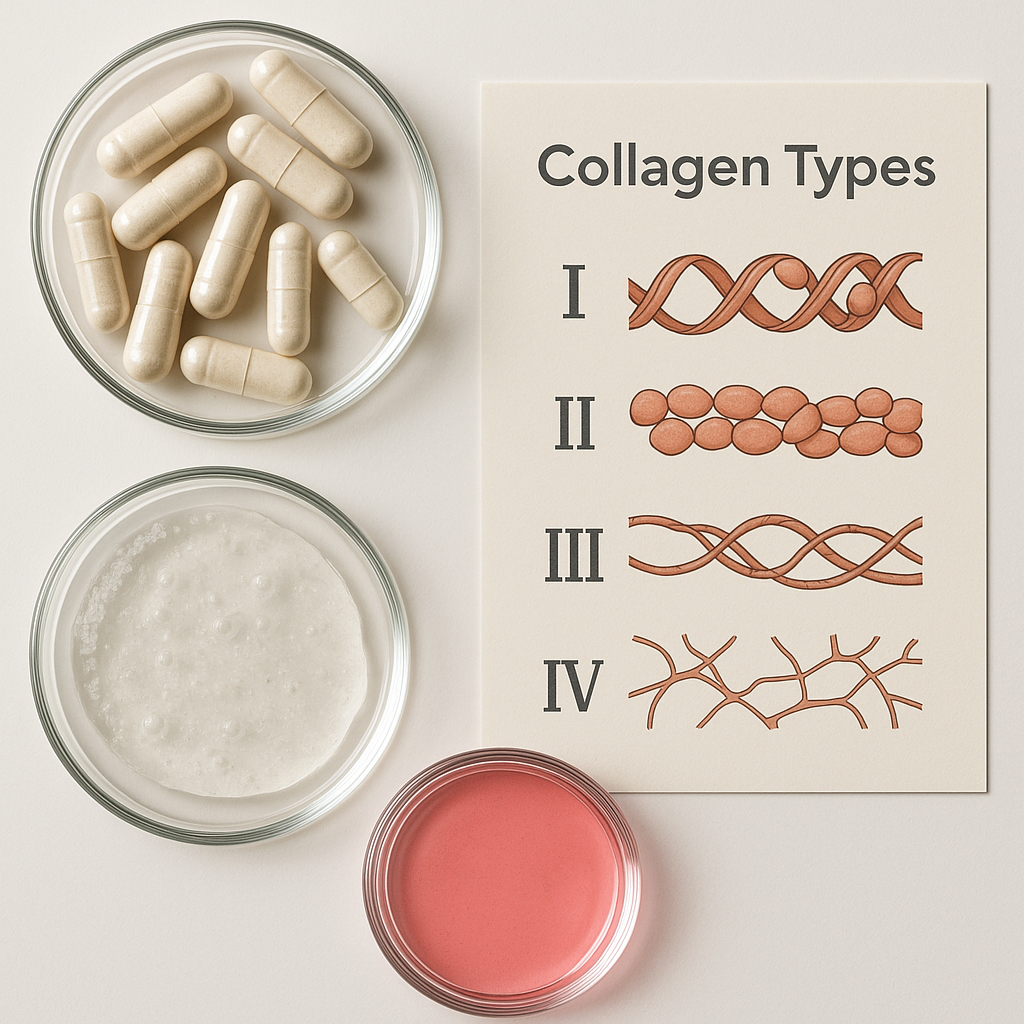
There are at least 16 different types of collagen, but the majority of collagen in the human body is made up of five primary types: Type I, Type II, Type III, Type IV, and Type V. Each type has distinct characteristics and functions.
Type I Collagen
[Internal Link: Beginner Resource]
Type I collagen is the most abundant form, accounting for about 90% of the collagen in the body. It is found in:
- Skin
- Tendons
- Bone
- Ligaments
- Cartilage
- Blood vessels
This type of collagen provides tensile strength and is crucial for the structural integrity of various tissues. It is often used in cosmetic and medical procedures due to its abundance and effectiveness in wound healing and tissue repair.
Type II Collagen
Type II collagen is primarily found in cartilage, making it essential for joint health. It provides support and cushioning to the joints and is a significant component of:
- Articular cartilage
- Intervertebral discs
- Elastic cartilage (found in the ear and epiglottis)
This type of collagen helps maintain the structural integrity of cartilage and plays a critical role in joint function, making it a focus of research in arthritis and other joint-related conditions.
Type III Collagen
Type III collagen is often found alongside Type I collagen and is primarily located in:
- Skin
- Blood vessels
- Intestines
- Uterus
This type of collagen provides elasticity and flexibility, which is particularly important during the healing process. It is often found in young skin and is essential for the formation of new tissue during wound healing.
Type IV Collagen
Type IV collagen is unique as it is not fibrillar but rather forms a network of fibers. It is primarily found in:
- The basement membrane (a thin layer of tissue that separates the epithelium from underlying connective tissue)
- Kidney glomeruli
- Lens of the eye
This type of collagen plays a crucial role in filtration and support, particularly in the kidneys and eyes, and is essential for maintaining the integrity of the basement membrane.
Type V Collagen
Type V collagen is involved in the regulation of collagen fibril formation and is found in:
- Hair
- Placenta
- Cornea
It plays a role in the development of tissues and is essential for proper cell adhesion and tissue organization.
Other Types of Collagen
While Types I-V are the most prevalent, there are other types of collagen that serve specific functions:
- Type VI: Found in connective tissues and associated with cell attachment and tissue organization.
- Type VII: Anchoring collagen found in the basement membranes, particularly in the skin.
- Type VIII: Present in the cornea and plays a role in the formation of blood vessels.
- Type IX: Associated with cartilage and involved in the regulation of collagen fibril formation in cartilage.
- Type X: Found in hypertrophic cartilage, particularly during bone growth.
Sources of Collagen
Collagen can be obtained from various dietary sources, and it can also be synthesized in the body. Here are some common sources of collagen:
Dietary Sources
- Animal Products: Bone broth, chicken skin, fish, and other animal connective tissues are rich in collagen.
- Gelatin: A cooked form of collagen derived from animal bones and skin, commonly used in cooking and baking.
- Collagen Supplements: Hydrolyzed collagen or collagen peptides are available in powder or capsule form, often marketed for skin, hair, and joint health.
Collagen Synthesis in the Body
The body naturally produces collagen using amino acids obtained from protein-rich foods. Key nutrients that support collagen synthesis include:
- Vitamin C: Essential for collagen formation and repair.
- Proline: An amino acid found in egg whites, dairy products, and meat.
- Glycine: Another amino acid that is abundant in collagen-rich foods.
- Copper: A mineral that plays a role in collagen cross-linking, found in nuts, seeds, and whole grains.
Collagen and Aging
As we age, collagen production naturally declines, leading to various signs of aging, including:
- Wrinkles and sagging skin
- Joint pain and stiffness
- Weaker bones
Understanding the types of collagen and their functions can help individuals take proactive measures to support their collagen levels through diet, lifestyle choices, and supplementation if necessary.
Collagen Deficiency
A deficiency in collagen can lead to various health issues, including:
- Joint pain and arthritis
- Skin aging and loss of elasticity
- Weakened bones
- Delayed wound healing
Recognizing the signs of collagen deficiency and addressing them through dietary changes, supplementation, and lifestyle adjustments is crucial for maintaining overall health and well-being.
Conclusion
Understanding the different types of collagen and their roles in the body is essential for anyone looking to maintain their health and vitality as they age. By incorporating collagen-rich foods, ensuring adequate nutrient intake, and considering supplementation when necessary, individuals can support their collagen levels and promote overall wellness.
FAQs
What are the main types of collagen in the human body?
The main types of collagen are Type I, Type II, Type III, Type IV, and Type V. Each type has specific functions and is found in various tissues throughout the body.
How can I increase my collagen levels naturally?
You can increase collagen levels by consuming collagen-rich foods like bone broth, fish, and chicken skin, as well as foods high in vitamin C and amino acids, which support collagen synthesis.
What are the benefits of collagen supplements?
Collagen supplements may help improve skin elasticity, reduce wrinkles, support joint health, and enhance overall skin hydration. However, results can vary from person to person.
At what age does collagen production begin to decline?
Collagen production typically begins to decline in the late 20s to early 30s, with noticeable effects often becoming apparent in the 40s and beyond.
Are there any side effects associated with collagen supplements?
Collagen supplements are generally considered safe for most people. However, some individuals may experience digestive discomfort or allergic reactions, particularly if they are sensitive to the source of collagen.
Related posts:
 Collagen Peptides: What They Are and Why They Work Better
 The Role of Collagen in Skin Health and Aging
 Collagen Types: Exploring the Different Forms and Their Functions
 Understanding Collagen: The Body’s Structural Protein
 Is Collagen a Protein? A Complete Guide to Understanding Collagen and Its Role in the Body
Vegetarian Collagen Alternatives: The Complete Guide
Is Collagen a Protein? A Complete Guide to Understanding Collagen and Its Role in the Body
Vegetarian Collagen Alternatives: The Complete Guide